Project Planning
Concrete Work Planned Around the Actual Use
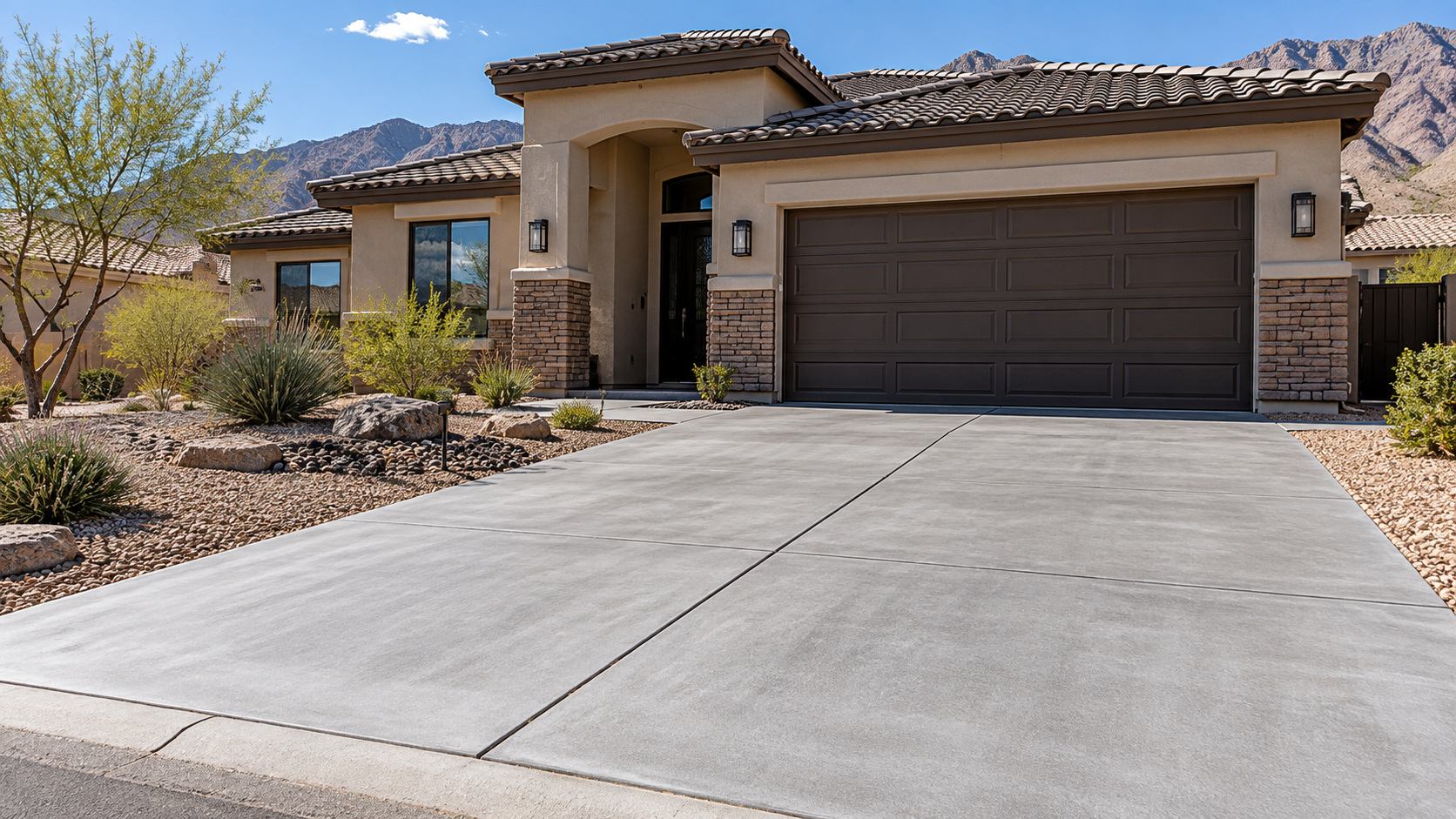
When we repair and replace damaged concrete, we start with how the finished concrete needs to work for the property, not just the number of square feet. Concrete does not fail for only one reason. Cracks can come from shrinkage, movement, settlement, loading, joint layout, impact, or a combination of conditions. Surface scaling, broken edges, low spots, and uneven panels each call for a different evaluation.
The first question is not simply whether a crack can be filled. The useful question is whether the underlying condition is stable enough for a repair to last. When the base has moved, drainage is poor, or several sections are failing, replacement can be a better use of the project budget.
Define what the surface will support and how it will be used every day.
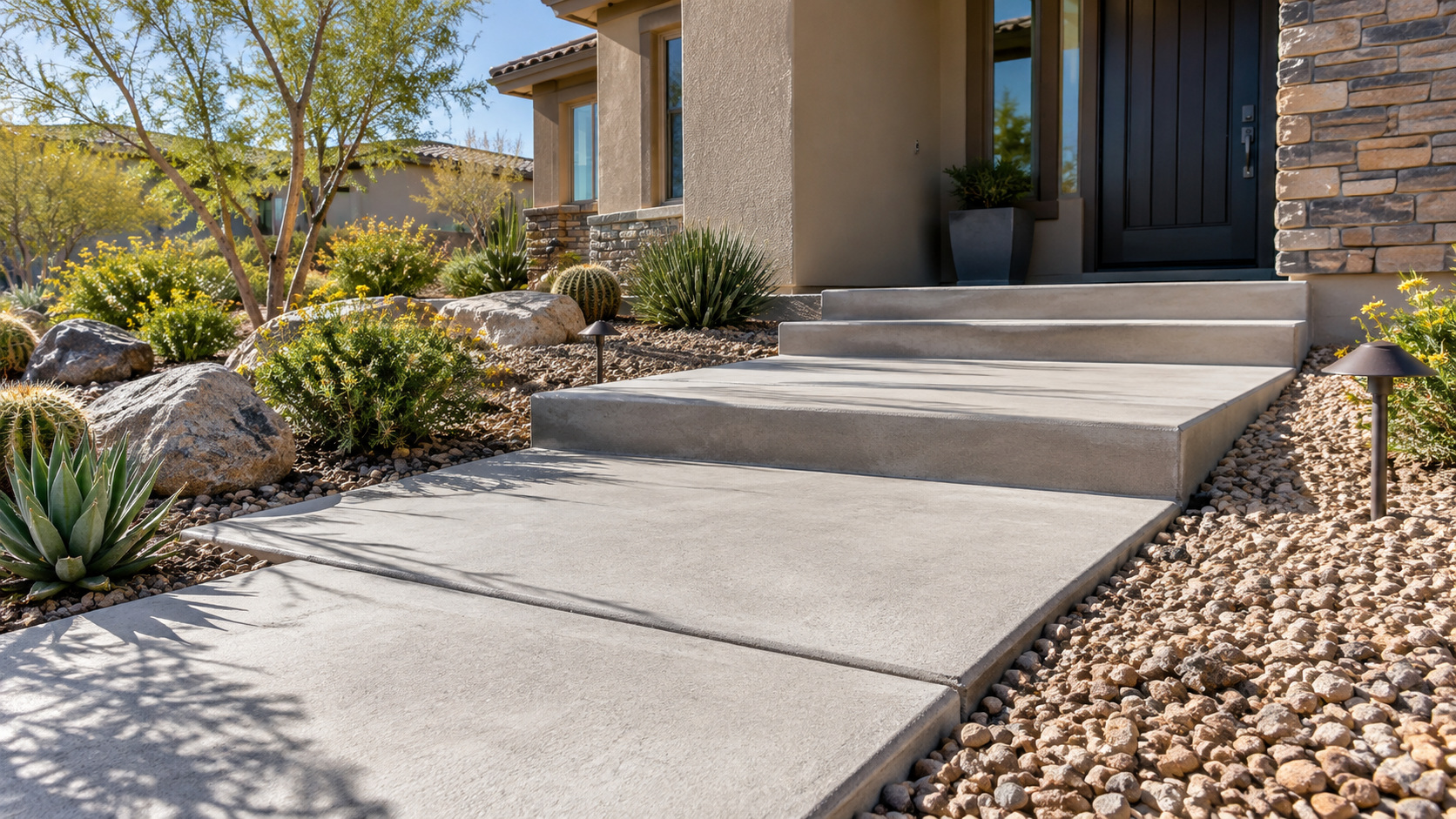
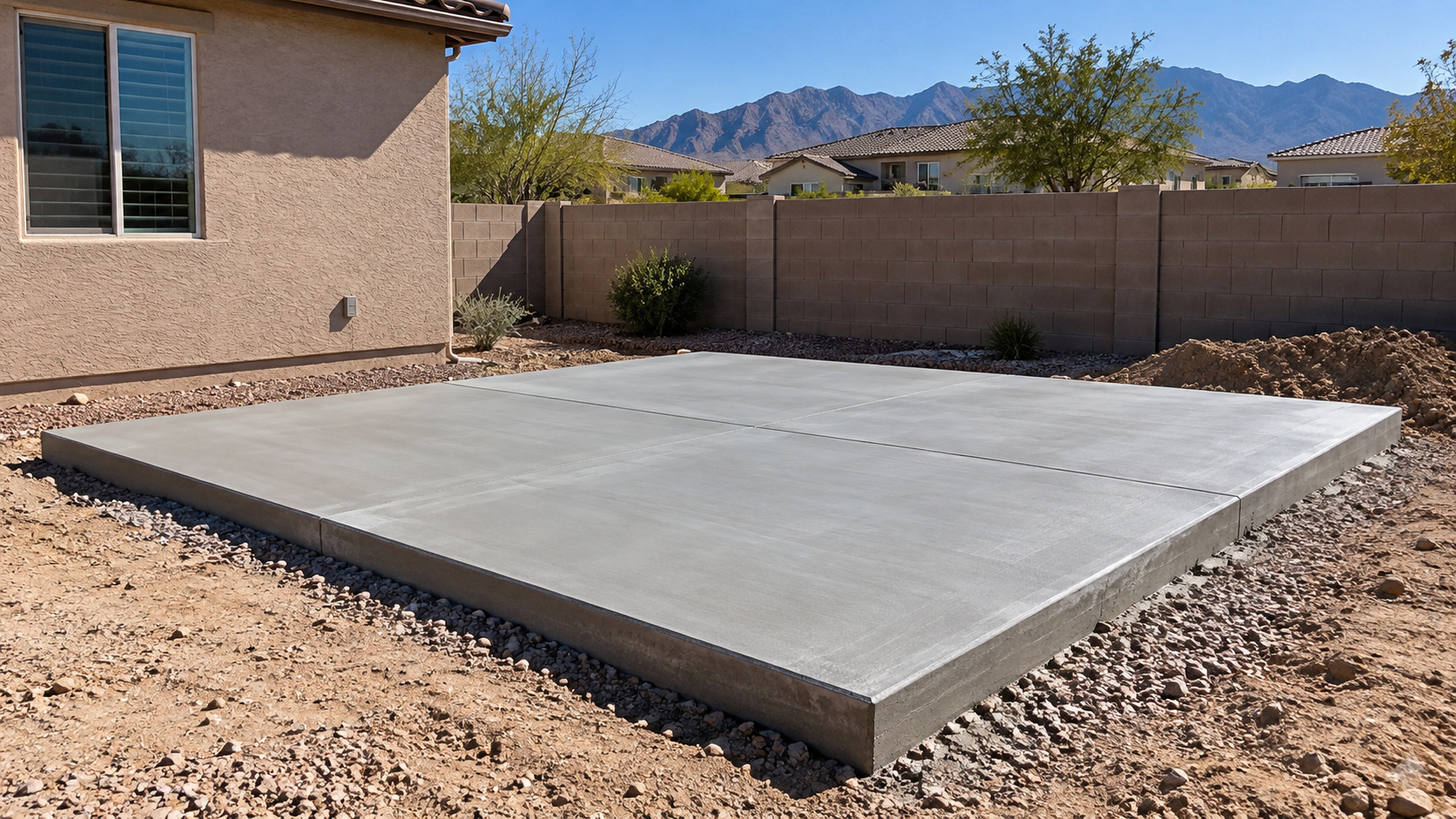
Plan excavation, compaction, elevation, and drainage before placement.
Choose a finish and placement plan that fit the property and access.
Preparation, Placement, and Long-Term Performance
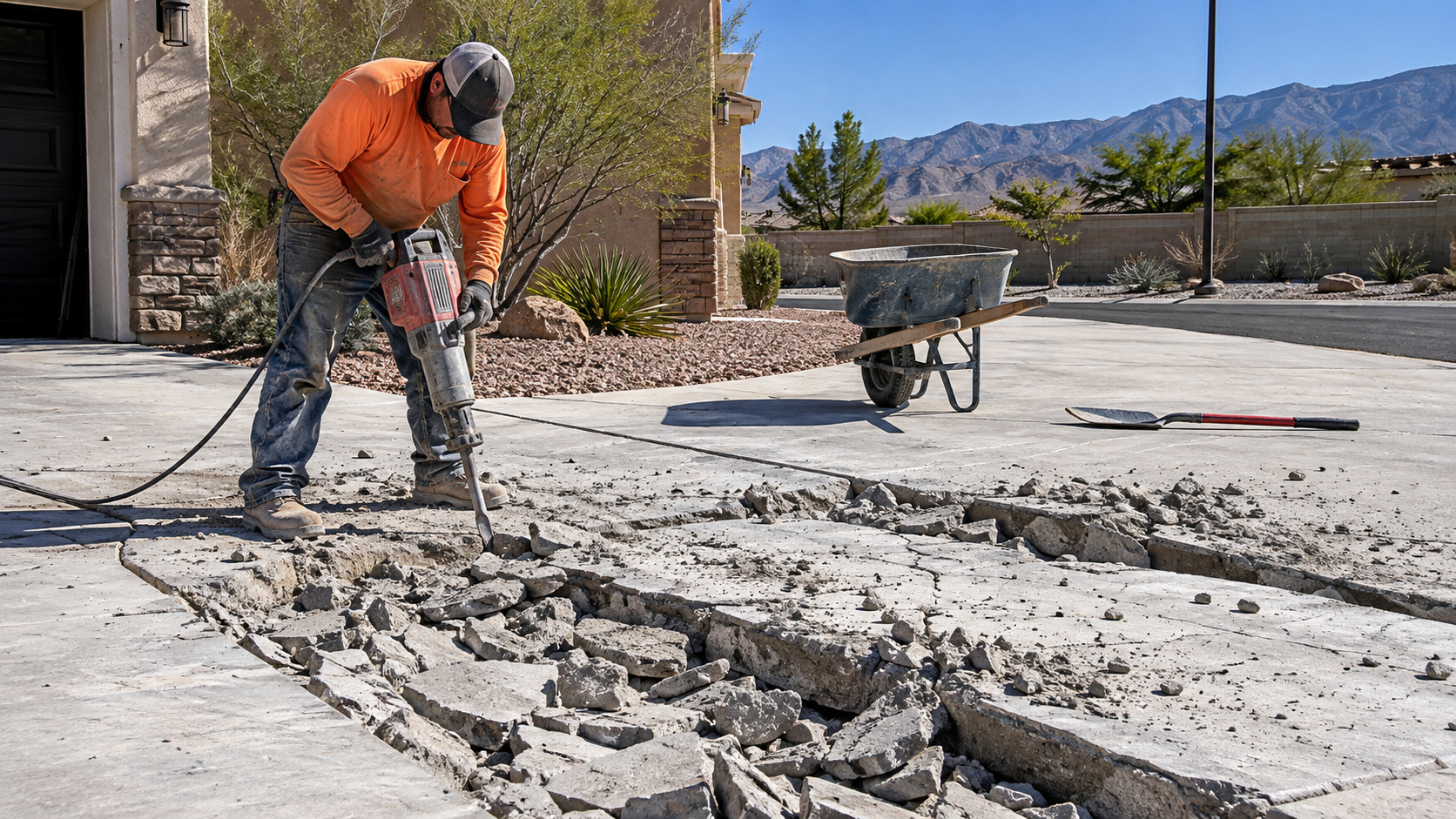
Our approach to a repair or replacement project starts below the finished surface, where preparation, grade, thickness, reinforcement, and transitions have the biggest effect on long-term performance. Repair can make sense for isolated damage where the surrounding slab is sound and the defect does not indicate continuing movement. Patching, crack treatment, edge repair, or replacing a limited panel may restore function without removing an entire surface.
Replacement becomes more attractive when cracking is widespread, slabs have settled, water collects in low areas, the surface has many failed repairs, or the existing layout no longer serves the property. Removal also provides access to correct base or grading problems before new concrete is placed.
Build the Scope Below the Surface
The visible finish is only the top layer of the project. Base conditions, thickness, reinforcement, drainage, joints, and transitions are where many performance decisions are made.
Local Conditions
North Las Vegas Conditions That Affect the Work
For North Las Vegas projects, we also plan around desert heat, dry air, access, drainage, and the conditions surrounding the work area. Long periods of intense sun, dry conditions, irrigation near hardscape, landscaping changes, and varied soil or fill conditions can all influence concrete around Las Vegas Valley properties. The visible symptom should be considered together with drainage, base condition, joints, and nearby loads.
Repair materials also have placement limits. Hot surfaces and rapid moisture loss can affect application and curing, so product instructions and weather conditions matter for repairs just as they do for new concrete.
Planning & Cost
Budgeting and Scope Factors
When we prepare an estimate, we look at the complete scope rather than treating square footage as the whole price. Repair pricing varies widely because a small surface defect and a settled driveway section are not comparable scopes. Consumer cost references show a broad range for professional concrete repair, which is a reminder that method and cause matter more than a single per-square-foot figure.
Replacement adds demolition, loading, disposal, excavation, base preparation, forming, reinforcement, new concrete, and finishing. It costs more up front than a small patch, but it may be more economical when repeated repairs would leave the underlying failure unresolved.
| Cost Driver | What Changes |
|---|---|
| Project size | Concrete volume, forming, finishing, and mobilization. |
| Demolition | Cutting, breaking, loading, disposal, and protection of adjacent work. |
| Base and grading | Excavation, compaction, imported base, and elevation correction. |
| Thickness and reinforcement | Structural scope based on use and loads. |
| Finish | Broom, color, stamp, borders, texture, and sealer where applicable. |
| Access | Gate width, placement distance, occupied areas, and equipment limits. |
Estimate Preparation
What to Include When You Request an Estimate
When you contact us, the more we know about the property and the intended use, the more useful the first estimate conversation can be. Provide approximate dimensions, photos when useful, the project address or ZIP code, whether existing concrete must be removed, the intended use, desired finish, known access restrictions, and any timing constraints. For structural or commercial work, include plans or specifications when available.
A detailed first description helps separate a simple flatwork project from one that needs demolition, extra base work, special reinforcement, permit coordination, or more complex placement logistics.